In today’s fast-paced world, everyone wants quick results. That’s why fad diets like Keto, Paleo, High-Protein, and Low-Carb become instant trends. They promise rapid weight loss, but rarely deliver sustainable health.
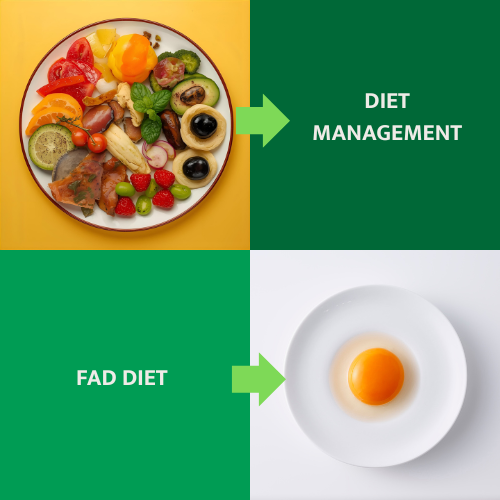
The reality is: dieting is temporary, restrictive, and often harmful, while diet management is balanced, sustainable, and life-changing.
At Health Gurukulam, I work with people to shift their mindset from “short-term dieting” to “long-term diet management”. The goal is not just to lose weight, but to build a pain-free, medicine-free, and age-defying lifestyle through nutrition.
🚫 The Problem with Dieting
When most people say they’re on a “diet,” what they mean is restricting food intake unnaturally. Popular fads like Paleo, Keto, or All-Protein diets are extreme and unbalanced.
Here’s why dieting usually fails:
1. Leads to Nutrient Deficiency
- Cutting out whole food groups means your body misses out on essential vitamins, minerals, and fiber.
- Example: Keto diets often lack enough fiber, leading to constipation and gut issues.
2. Triggers Cravings and Binge Eating
- Restrictive diets increase the psychological desire for “forbidden foods.”
- Once willpower fades, binge eating follows — leading to weight gain rebound.
3. Slows Down Metabolism
- Extreme calorie restriction tricks the body into “starvation mode.”
- The metabolism slows, making it harder to lose weight later.
4. Medical Complications
- High-protein diets stress the kidneys and liver.
- Low-carb diets can cause fatigue, mood swings, and nutrient imbalance.
- Yo-yo dieting weakens immunity and accelerates aging.
Dieting is like putting a temporary patch on a deep wound. It may hide the issue for a while, but the root cause remains — and often worsens.
The Power of Diet Management
Unlike dieting, diet management is not about restrictions. It is about understanding your body, your clinical history, and your lifestyle, and then designing a nutrition plan that works with your body — not against it.
Core Principles of Diet Management
- Balanced Nutrition – Ensuring your body receives the right mix of protein, carbs, fats, vitamins, and minerals.
- Customization by Body Type – Every person is unique. A diet plan for someone with PCOS will differ from someone with arthritis or diabetes.
- Clinical Considerations – Diet management addresses underlying health issues like thyroid imbalance, high blood pressure, or joint pain.
- Sustainability – Focuses on long-term healthy eating habits instead of quick fixes.
- Mindful Eating – Encourages awareness of food choices, portion sizes, and body signals.
Benefits of Diet Management vs Dieting
Sustainable Weight Loss
Fad diets may help you drop kilos quickly, but the weight often returns. Diet management focuses on steady fat loss, preserving muscle, and avoiding rebound weight gain.
Improved Joint & Spine Health
Inflammation from poor eating habits worsens knee pain, arthritis, and back issues. A balanced, anti-inflammatory diet helps restore mobility and reduce pain.
Energy & Vitality
Dieting often leaves you tired and moody. Diet management fuels your body with energy-rich nutrients that keep you active all day.
Disease Prevention & Reversal
Diet management supports blood sugar control, hormonal balance, heart health, and immunity — helping prevent or even reverse chronic diseases.
Age-Defying Nutrition
Proper diet slows aging by reducing oxidative stress, keeping skin glowing, and strengthening bones and muscles.
Example: Dieting vs Diet Management in Real Life
- Rita, 38, tried the Keto diet. She lost 7 kg in a month but soon experienced fatigue, hair loss, and severe cravings. Within 3 months of stopping Keto, she gained 10 kg back.
- Meera, 40, chose a diet management plan. Instead of cutting carbs, she switched to whole grains, lean proteins, healthy fats, and seasonal fruits & vegetables. She lost 1–2 kg steadily each month, reduced her knee pain, and maintained her energy levels. After 1 year, she was 10 kg lighter and free from joint stiffness — without ever “dieting.”
What Does a Diet Management Plan Look Like?
A good diet management plan is:
- Flexible: You don’t need to give up your favorite foods — just healthier versions.
- Personalized: Designed around your body type, age, and medical history.
- Practical: Easy-to-follow meals that fit your daily routine.
- Holistic: Considers lifestyle, stress, and emotional eating patterns.
This ensures steady energy, improved digestion, and reduced cravings.
Why Health Gurukulam Promotes Diet Management
At Health Gurukulam, my mission is to help people achieve pain-free living and sustainable weight management without falling into the trap of fad diets.
Through MPESS (Mental, Physical, Emotional, Social, Spiritual) Framework, I ensure that diet management is not just about food — it’s about creating a lifestyle where:
- Your mind is stress-free
- Your body is nourished
- Your emotions don’t control eating
- Your social circle supports healthy choices
- Your spirit stays motivated
This holistic system ensures that you don’t just lose weight — you gain health, confidence, and longevity.
Conclusion
Dieting may look attractive for quick fixes, but it’s like building a house on weak foundations — it won’t last. Diet management, on the other hand, builds a strong foundation of balanced nutrition, mindful habits, and sustainable results.
If you want to:
- Lose weight without crash diets
- Build healthy eating patterns
- Strengthen your spine, joints, and immunity
- Slow down aging naturally
- Avoid medicines and surgeries
…then diet management is the path you need.